

Long before I began creating heirloom portraits for other families, there was a painted portrait hanging in my own childhood home.
My mother commissioned it when I was five years old. I wore a custom dress, and a local artist painted my portrait on the grounds of Reynolda Gardens in Winston-Salem, North Carolina.
Decades later, it still hangs in my mother’s home.
What strikes me now is not simply that the portrait survived, but that it was created with the expectation that it would. My mother chose the setting, the clothing, the artist, and the finished piece with permanence in mind. It was never intended to document only what I looked like at five years old. It was created as something our family would keep.
That portrait has deeply influenced the way I think about photographs and the artwork we create from them.
It is also part of the inspiration behind the Painterly Portraits we offer at Meghan Goering Photography: commissioned artwork that begins with photographic portraiture and is transformed into a finished piece designed to live in your home for generations.
Here is how the process works.
What Is a Painterly Portrait?
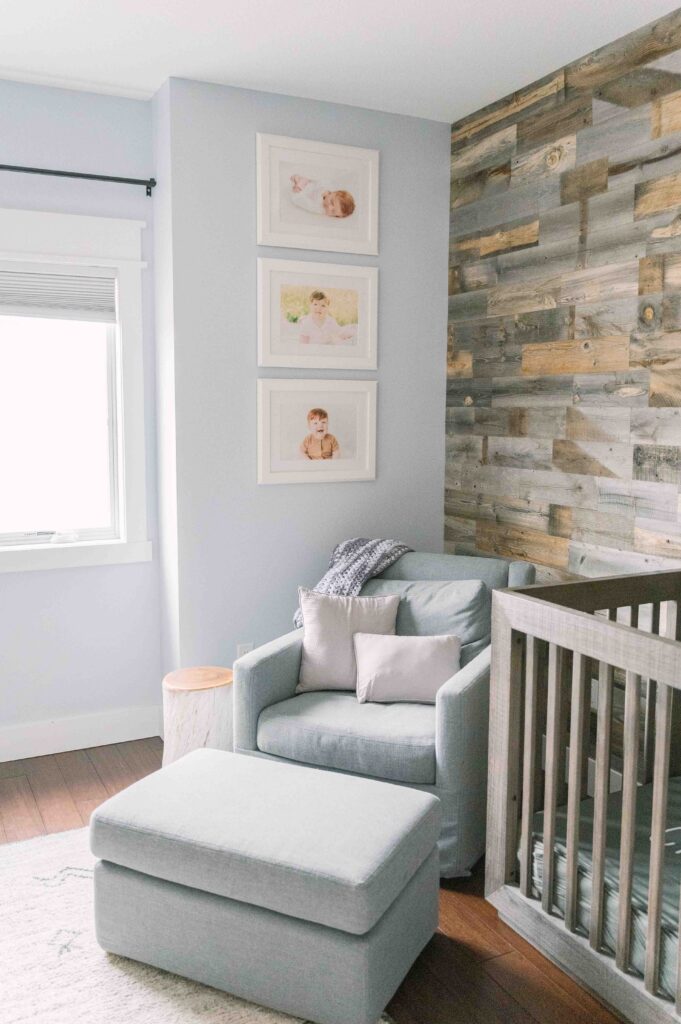
A Painterly Portrait begins as a photograph and is individually transformed through custom digital artistry to create the character and depth of a traditional painted portrait.
The process allows us to preserve something particularly important: your child’s actual expression.
Rather than asking a child to sit for a painter over multiple sessions, we begin with a carefully created photographic portrait. From there, an artist uses digital brushwork to soften photographic detail, refine the background, and build a more painterly interpretation of the original image.
The finished artwork can then be produced on museum-quality giclée canvas, with the option of adding contoured brushwork to the surface for additional texture and dimension.
From the initial portrait session through framing and installation, each decision is considered as part of the finished piece.
Step 1: Creating the Original Portrait
Every Painterly Portrait begins with the photograph.
This is perhaps the most important part of the entire process because the artistry that follows can enhance a portrait, but it cannot manufacture the expression or connection that made the original image exceptional.
During our heirloom portrait sessions, we consider clothing, composition, posture, lighting, and expression with the finished artwork already in mind.
Our studio wardrobe includes pieces selected specifically for their timeless quality and the way they translate into finished artwork: classic silhouettes, beautiful textures, traditional details, and clothing that does not immediately belong to a particular trend or year.
We also allow children the time they need to become comfortable in front of the camera. The objective is not simply a technically beautiful photograph. It is to create a portrait that still feels unmistakably like the child within it.
Step 2: Selecting the Portrait
After the session, we meet for a private design and ordering appointment to select the image that will become the finished artwork.
Not every beautiful photograph necessarily makes the strongest painting.
For a Painterly Portrait, we consider the expression, composition, position of the hands and body, clothing, background, and how the image will translate at the scale at which it will eventually be displayed.
We also consider the room where the finished portrait will live. A formal portrait intended for a large living room may call for a different composition than an intimate piece designed for a child’s bedroom.
This is where the portrait begins to move from photograph to commissioned artwork.
Step 3: Transforming the Photograph Into a Painting
Once the portrait has been selected, the photographic image is sent to a professional digital artist for its painterly transformation.
This is not simply a filter applied to a photograph.
The artist works individually on the image, using digital brushwork to reinterpret photographic detail. Skin, hair, clothing, and other elements are carefully refined while preserving the child’s recognizable features and expression.
The background can also be treated more painterly, allowing distracting photographic elements to recede and creating greater depth and cohesion within the composition.
The objective is not to make your child look like someone else.
It is to preserve the portrait we created while giving the finished work the character of a traditional painting.
Step 4: Producing the Portrait on Fine-Art Canvas
Once the digital artwork has been approved, it is produced as a fine-art giclée canvas.
Giclée printing is widely used for fine-art reproduction because it allows for exceptional tonal range, detail, and color fidelity. When paired with high-quality archival materials, it creates a finished piece intended for long-term display.
Canvas is particularly well suited to Painterly Portraits because its surface contributes to the visual character of the artwork. Rather than the smooth finish of a photographic print, the texture begins to reinforce the impression of a painted work.
Step 5: Adding Contoured Brushwork
For families who choose our brushwork finish, additional texture is applied directly to the surface of the finished canvas.
The brushwork follows the contours and movement within the artwork—the folds of a dress, the direction of the hair, the shapes within the background—rather than covering the canvas with a uniform texture.
The effect is subtle from across the room.
Up close, however, light catches the raised surface and reveals another layer of dimension. The portrait no longer has only the visual appearance of brushwork; the surface itself carries texture.
This finishing step is one of the details that gives the completed portrait its presence as a physical work of art.
Step 6: Choosing the Scale and Frame
The artwork itself is only part of the finished composition.
Scale and framing determine how the portrait will ultimately relate to the room in which it hangs.
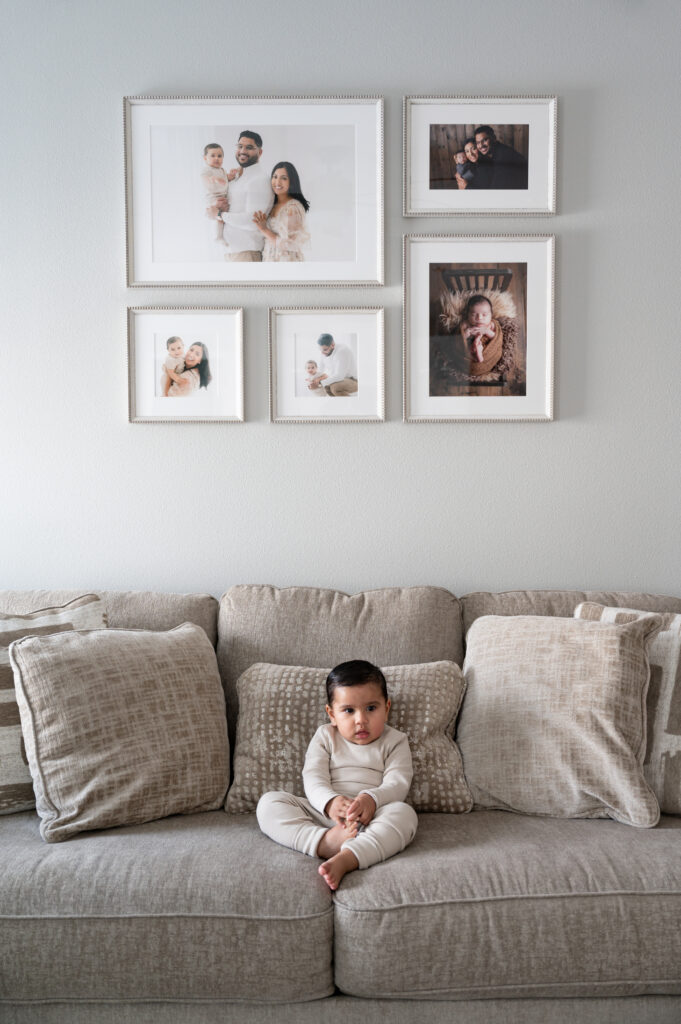
During the design process, we consider the dimensions of the wall, surrounding furniture, ceiling height, viewing distance, and architectural style of the home. When helpful, we can use design software to show artwork to scale on a photograph of your actual wall before anything is ordered.
We then select custom framing to complement both the portrait and the home.
A substantial gilded frame might be appropriate for a formal, traditional portrait. Another home may call for a quieter profile or a more restrained finish. The goal is not simply to choose a beautiful frame in isolation, but to create a finished piece in which the portrait, frame, and room feel considered together.
Wall groupings and portrait trios can be designed in the same way.
From Portrait to Heirloom
The portrait of me at five years old has now been hanging for decades.
That changes the way I think about the artwork I create for my own clients.
When we design a Painterly Portrait, we are not designing only for the wall where it will hang this year. We are considering what will still feel beautiful twenty or thirty years from now—and what might eventually leave that wall and belong to one of your children.
That is the distinction between creating another image and creating an heirloom.
Through the Meghan Goering Photography heirloom experience, we guide the entire process—from creating the original portrait to selecting the artwork, determining its scale, choosing custom framing, and installing the finished piece in your home.
The result is a portrait created with permanence in mind.
If you are considering a commissioned Painterly Portrait for your family, contact Meghan Goering Photography to begin planning your session.

Comments