

A commissioned portrait is created to become part of a home—not simply something added to a wall.
Its scale matters.
The right portrait should feel considered in relation to the architecture, furnishings, and proportions of the room. It should have enough presence to draw the eye without overwhelming the space, and enough scale to allow the details of the artwork to be appreciated from the distance at which it will naturally be viewed.
For that reason, choosing the size of a commissioned portrait is about far more than selecting a canvas dimension. It begins with understanding where the artwork will live, how it will be viewed, and what role you want it to have within your home.
Why the Size of a Commissioned Portrait Matters

Scale is one of the most important elements in creating artwork that feels intentional within a room.
A portrait that is too small for its surroundings can feel disconnected from the space, particularly when placed above a substantial piece of furniture or on a large architectural wall. Conversely, artwork that is oversized without consideration for the room can compete with its surroundings rather than complement them.
The goal is proportion.
A well-scaled commissioned portrait should feel as though it was created for the space it inhabits. And when the proportions are right, the portrait becomes more than wall décor. It becomes part of the architecture of the home—and, eventually, part of the visual history of the family who lives there.
Begin With the Space
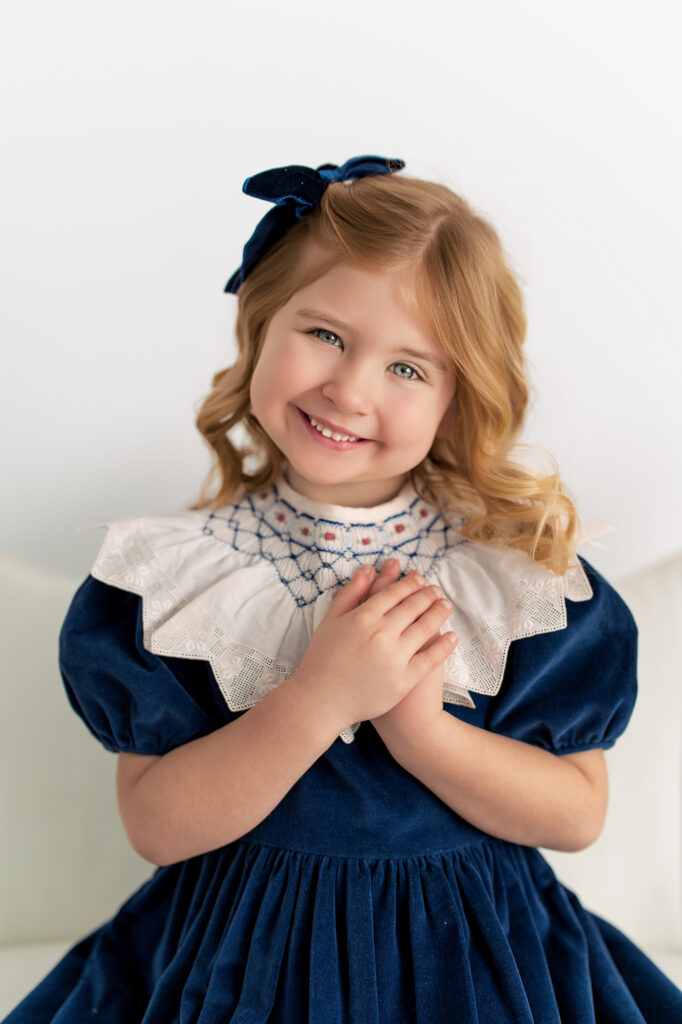
Before determining the dimensions of a portrait, consider where it will ultimately be displayed.
Ceiling height plays an important role in determining scale. Rooms with tall ceilings and generous wall space can often accommodate substantial artwork beautifully, while rooms with standard ceiling heights may benefit from a more restrained scale.
Furniture placement is equally important. A portrait displayed above a sofa, console, piano, fireplace, or bed should relate proportionally to the furniture beneath it rather than appearing to float independently on the wall.
The scale of the room should also inform the decision. A formal living room, large entryway, or sweeping staircase may call for a portrait with significant presence. A nursery, bedroom, study, or more intimate corner of the home may invite something quieter.
At Meghan Goering Photography, we take the guesswork out of this decision. During the design process, we can photograph the walls of your home and use specialized design software to show your finished portrait to scale in your actual space before your artwork is ordered.
You are able to see how different sizes relate to your furniture and architecture rather than trying to imagine what a particular set of dimensions will look like once it is hanging.
Consider the Composition of the Portrait

The composition itself also influences how large a commissioned painting should be.
A closely cropped portrait and a full-length composition communicate very differently and require different amounts of space to be fully appreciated.
Head-and-shoulders portraits create an intimate study of the subject. Because the face occupies a greater percentage of the artwork, these portraits can retain considerable visual impact at a more modest size.
Three-quarter portraits allow more of the subject’s posture, wardrobe, and gesture to become part of the composition. They often benefit from additional scale so those elements remain visible and intentional.
Full-length portraits have a long history within traditional portraiture and generally deserve more generous dimensions. The additional scale allows the figure, clothing, setting, and finer details of the composition to be appreciated without feeling compressed.
For a child’s full-length heirloom portrait, for example, the sweep of a dress, the position of a hand, or the delicate shape of a shoe may all contribute to the finished piece. At the appropriate scale, those details become part of what makes the portrait extraordinary.
What Size Is Best for a Commissioned Portrait?
There is no single dimension that is appropriate for every commissioned portrait, but there are useful starting points.
Portraits around 16 × 20 inches or 20 × 24 inches can work beautifully in more intimate spaces or as part of a thoughtfully designed grouping.
Sizes such as 24 × 30 inches and 30 × 40 inches begin to create greater presence and can work particularly well over furniture or on walls where the portrait is intended to serve as a focal point.
For larger rooms, fireplaces, staircases, entryways, or significant statement walls, 40 × 50 inches and larger may be much more appropriate to the architecture.
These dimensions should never be considered rules. A 30 × 40 portrait may feel commanding in one room and surprisingly small in another. The proportions of the wall, furniture, ceiling height, viewing distance, frame, and portrait composition all influence the final decision.
This is precisely why we prefer to design artwork for the individual home rather than recommend a standard size to every family.
Viewing Distance Matters

Another important consideration is how far away you will typically be when viewing the portrait.
Artwork placed at the end of a long hallway or above a fireplace in a large room needs enough scale to retain its presence from a distance. Details that appear substantial while standing two feet from a canvas can become remarkably subtle from fifteen feet away.
In a nursery or bedroom, the opposite may be true. Because the artwork is experienced from a much closer distance, a more intimate portrait can still feel substantial.
When designing our heirloom portraits, we consider not only the dimensions of the wall but also how the family will actually experience the artwork within the room.
Choosing the Right Size for a Painterly Portrait
At Meghan Goering Photography, our Painterly Portraits combine photographic portraiture with the depth and character of a painted work.
Each piece begins with a carefully created and selected portrait. The photograph is then individually transformed through custom digital brushwork to create the appearance of a traditional painting. The finished artwork can be produced on museum-quality giclée canvas, with optional contoured brushwork adding further texture and dimension to the surface.
Because of the detail within these pieces, scale becomes particularly important.
For a portrait intended to anchor a living room, fireplace, entryway, or statement wall, I generally prefer a size substantial enough to allow the artwork to command the space.
For a child’s bedroom, nursery, or another intimate setting, the scale can be quieter while still allowing the artistry of the portrait to be appreciated.
Most importantly, the decision is made for the portrait and the home in which it will live.
Designing an Heirloom for Your Home

Choosing the size of a commissioned portrait should not require standing in front of an empty wall with a tape measure and hoping you have chosen correctly.
It is part of the design process.
Through the Meghan Goering Photography heirloom experience, we guide families through portrait selection, sizing, finishing, custom framing, and installation. We consider the proportions of your home alongside the composition of the portrait so the finished artwork feels intentional from the moment it is placed on the wall.
Because the goal is not simply to create something beautiful for your home today.
It is to create a portrait worthy of remaining there for decades—and, one day, of belonging in the home of the next generation.
If you are considering a commissioned portrait for your family, reach out to begin the conversation. We would be honored to help you create a piece designed specifically for your family, your home, and the generations who will inherit it.

Comments