

One of the most beautiful ways to display heirloom portraits is by creating a thoughtfully designed gallery wall.
A gallery wall allows you to display multiple portraits together in a way that feels intentional, balanced, and deeply personal. Instead of a single photograph hanging on a wall, a gallery becomes a visual story of your family.
Many families begin with just one or two portraits and gradually build their gallery over time as their children grow.
When designed well, a portrait gallery wall becomes one of the most meaningful spaces in the home — something your children walk past every day and something guests always stop to admire.
I’m Meghan Goering, an heirloom portrait photographer serving families in Cedar Falls, Cedar Rapids, Iowa City, and throughout the Cedar Valley. One of my favorite parts of the heirloom portrait experience is helping families design gallery walls that feel both timeless and personal.
In this guide, I’ll share how to create a gallery wall that showcases heirloom portraits beautifully in your home.
Start with the Wall, Not the Frames
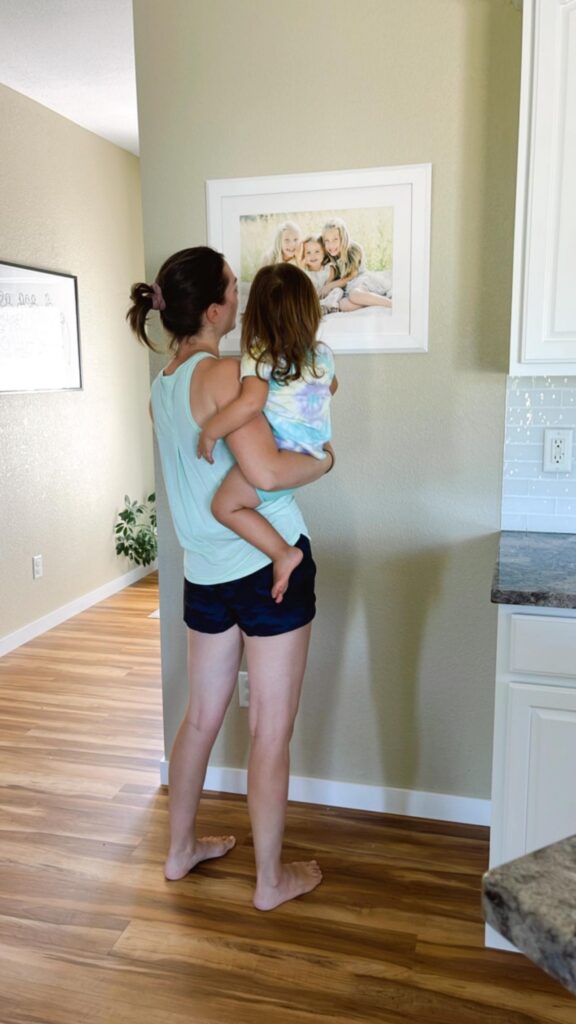
One of the most common mistakes people make when creating a gallery wall is buying frames first and figuring out the layout later.
Instead, start by looking at the wall itself.
Consider:
- the width of the wall
- the height of the ceiling
- nearby furniture such as sofas, buffets, or pianos
- natural sight lines in the room
A large staircase wall, for example, can accommodate a growing collection of portraits. A smaller wall above a console table might be better suited for a symmetrical arrangement of two or three portraits.
Planning around the wall ensures that the final display feels balanced and intentional.
Choose a Focal Point
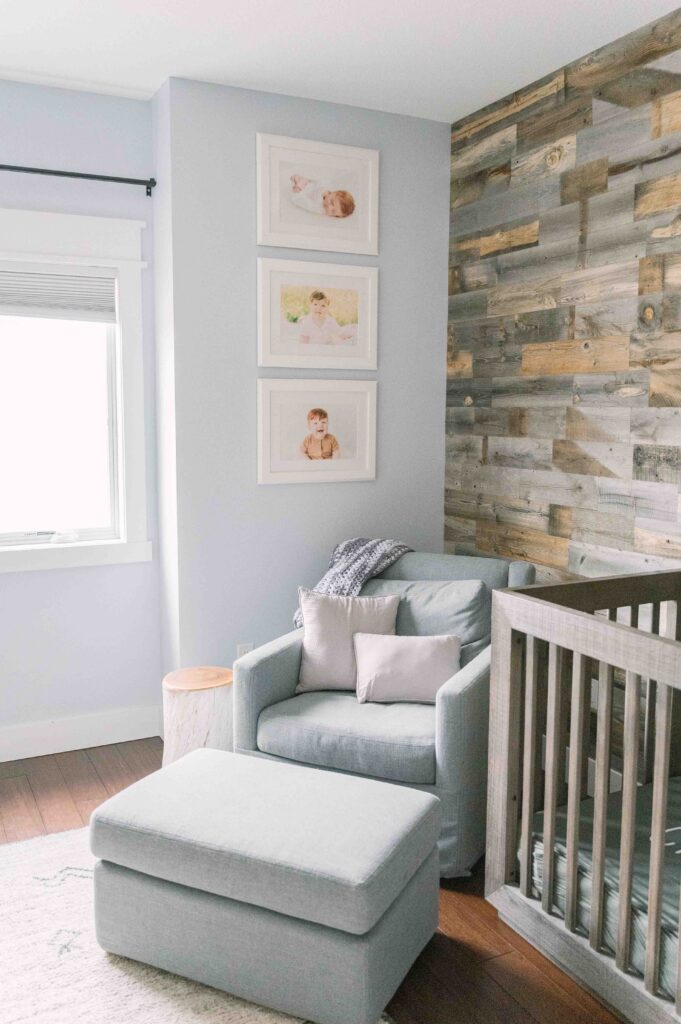
Every good gallery wall has a focal point.
This could be:
- a larger framed portrait
- a painterly portrait
- a portrait placed directly above furniture
Once the focal portrait is placed, the surrounding portraits can be arranged around it in a way that feels cohesive.
For example, a larger portrait may anchor the center of the wall while smaller portraits of siblings are arranged nearby.
This creates visual hierarchy and prevents the gallery from feeling cluttered.
Mix Portrait Sizes for Visual Interest
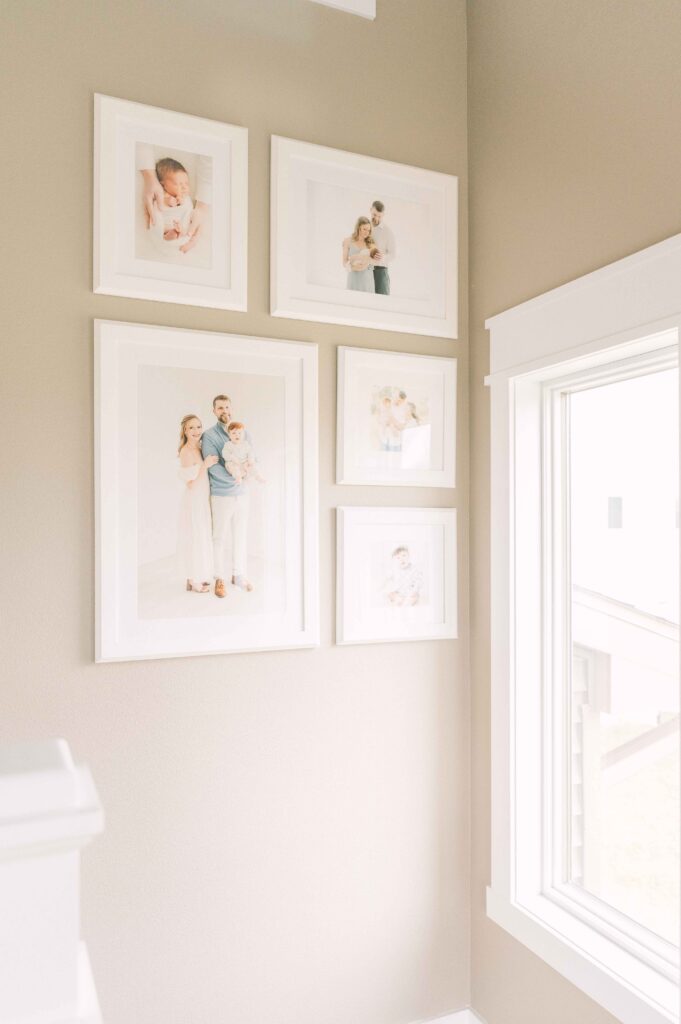
Gallery walls tend to feel most natural when they include a mix of portrait sizes.
For example:
- one larger statement portrait
- two medium portraits
- several smaller portraits
The variation in scale helps guide the eye across the wall and creates movement within the display.
However, the frames themselves should usually remain consistent so the gallery still feels cohesive.
Incorporate Oval Portraits
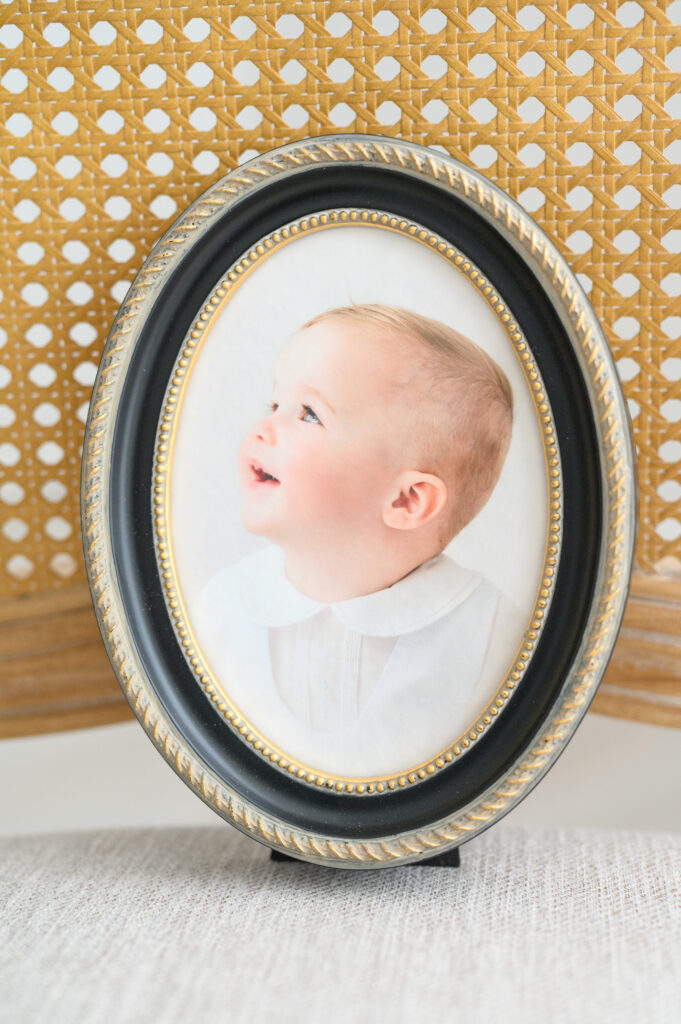
Oval portraits are one of the most recognizable styles of heirloom portraiture and work beautifully in gallery wall designs.
Because oval frames naturally draw attention to the face, they add softness and elegance to a display.
Some families choose to incorporate oval portraits in several ways:
- a row of oval portraits of siblings
- symmetrical ovals on either side of a larger portrait
- oval portraits mixed with rectangular frames
The shape adds variety while still maintaining a timeless aesthetic.
Use Symmetry When Possible
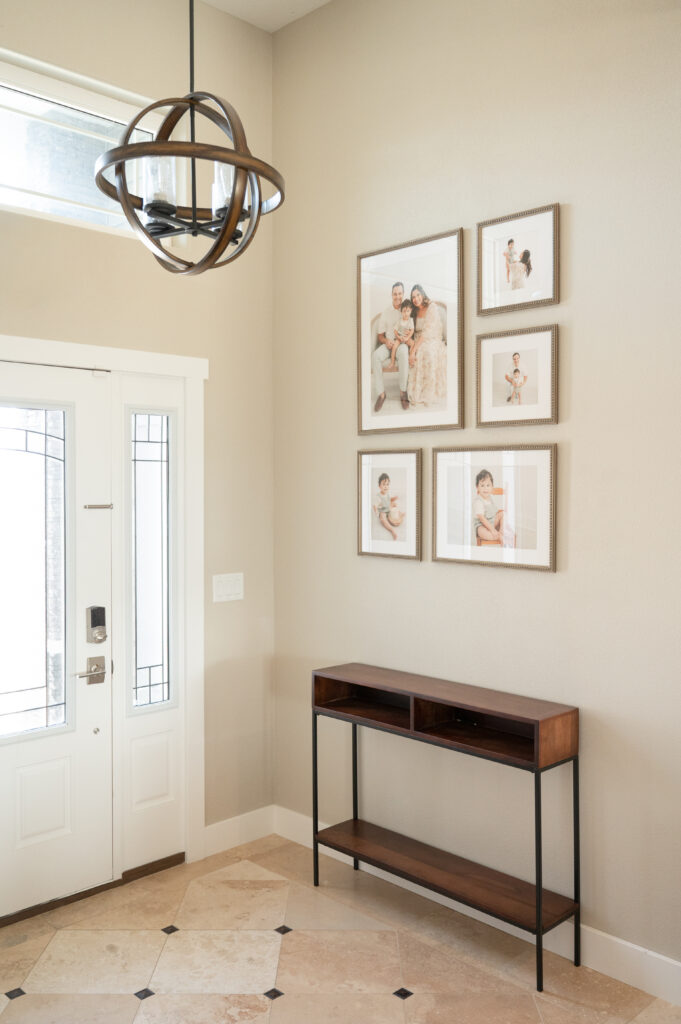
While some gallery walls have a relaxed, collected look, heirloom portrait galleries often benefit from a bit of symmetry.
Symmetrical arrangements feel calm and intentional, which works especially well for classic portraiture.
Examples include:
- two portraits evenly spaced above a buffet
- three portraits arranged in a straight row
- oval portraits placed symmetrically around a mirror
Symmetry also helps the portraits complement the architecture of the room.
Design Around Furniture
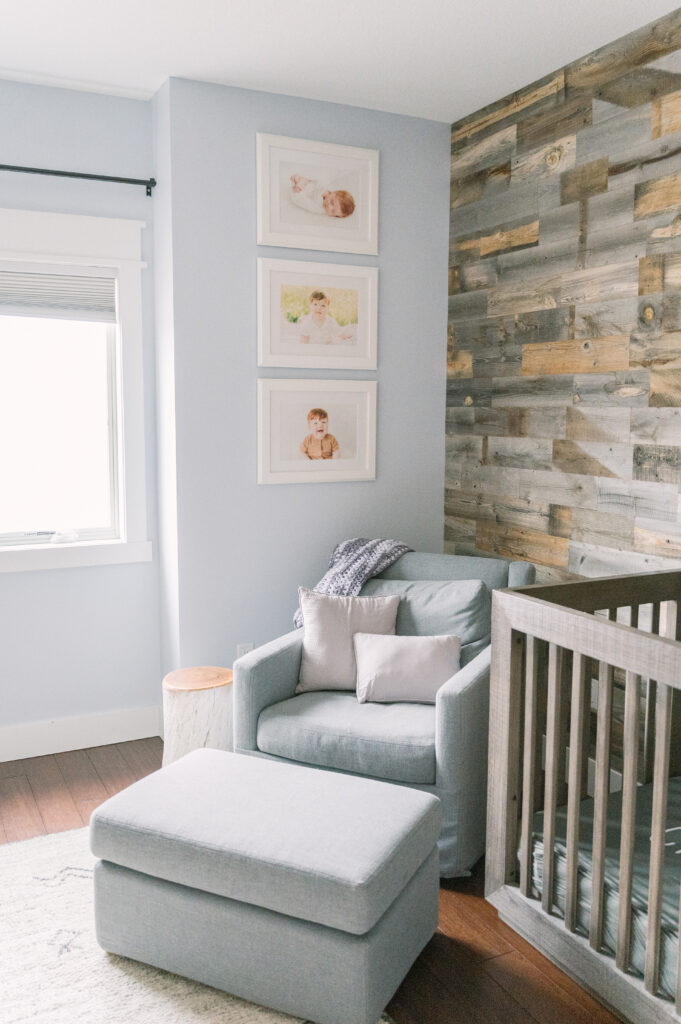
Furniture often determines the best placement for a gallery wall.
Common anchor points include:
- above a sofa
- above a piano
- above a dining room buffet
- along a staircase wall
When portraits are placed in relation to furniture, they feel integrated into the room rather than floating randomly on the wall.
For example, a set of symmetrical oval portraits on either side of a mirror above a dining room buffet creates an elegant focal point that ties the entire space together.
Leave Space to Grow
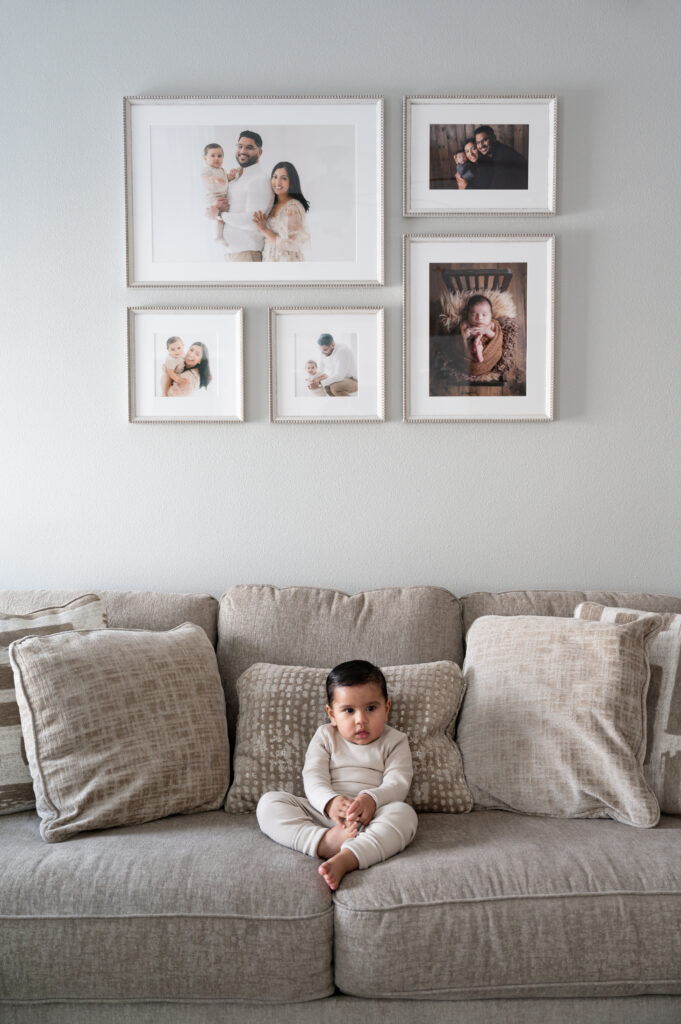
One of the most special aspects of heirloom portrait galleries is that they can grow over time.
Many families begin with portraits of their first child and add new portraits as their family grows or as their children reach new stages of childhood.
This gradual growth makes the gallery feel even more meaningful — it becomes a visual timeline of your family.
How I Help Families Design Their Gallery Walls
Designing a gallery wall can feel overwhelming, which is why I guide families through the process during their heirloom portrait experience.
After your session, we meet for your ordering appointment where we design your wall together. Using design software, I create a mockup of your portraits on a photograph of your actual room so you can see exactly how the finished display will look.
This allows us to determine:
- the ideal portrait sizes
- the best layout for your wall
- which frame styles work best with your home
You’ll know exactly what your finished portrait display will look like before anything is printed or framed.
Creating a Gallery Wall That Becomes Part of Your Home
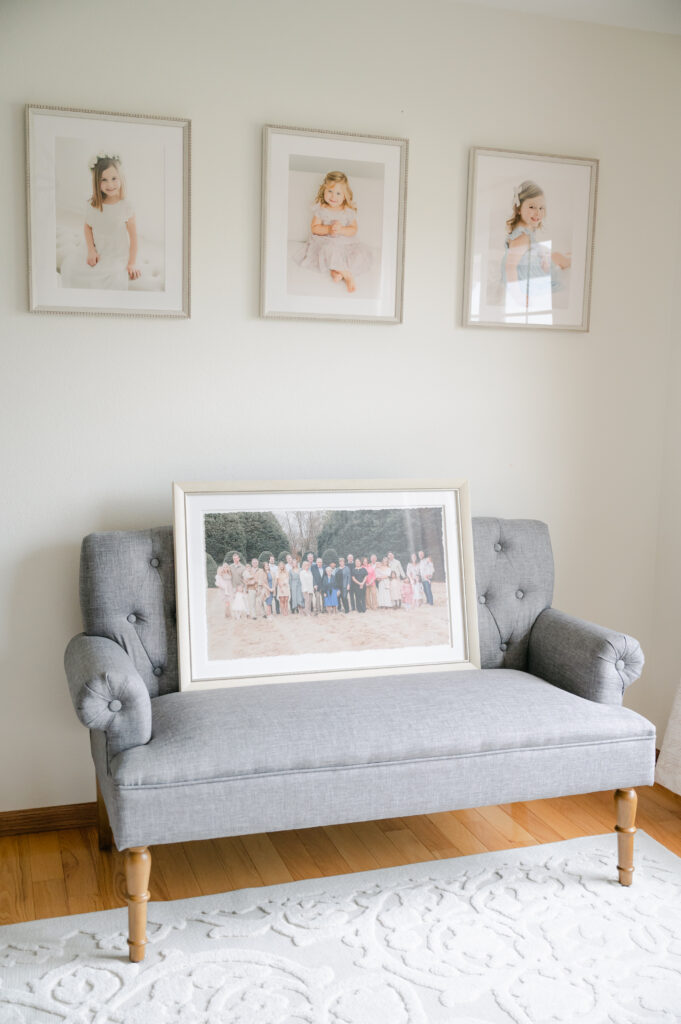
When heirloom portraits are thoughtfully displayed, they become more than just decoration.
They become part of the rhythm of your home.
Your children grow up seeing themselves on the walls, surrounded by reminders that they belong and that they are loved. Guests pause to admire them. Grandparents recognize them instantly.
That is the beauty of heirloom portraiture.
If you’re a family in Cedar Falls, Cedar Rapids, Iowa City, or the Cedar Valley, I would love to help you create heirloom portraits and design a gallery wall that becomes part of your family’s story.
Because the best portraits are not the ones stored on a hard drive.
They are the ones you see every day.

Comments